Real Data
Data from real-world actions
We collect robot and humanoid motion data, sensor readings, and operation histories through motion measurement, including motion capture, and hardware logging, then prepare the data for its intended use.
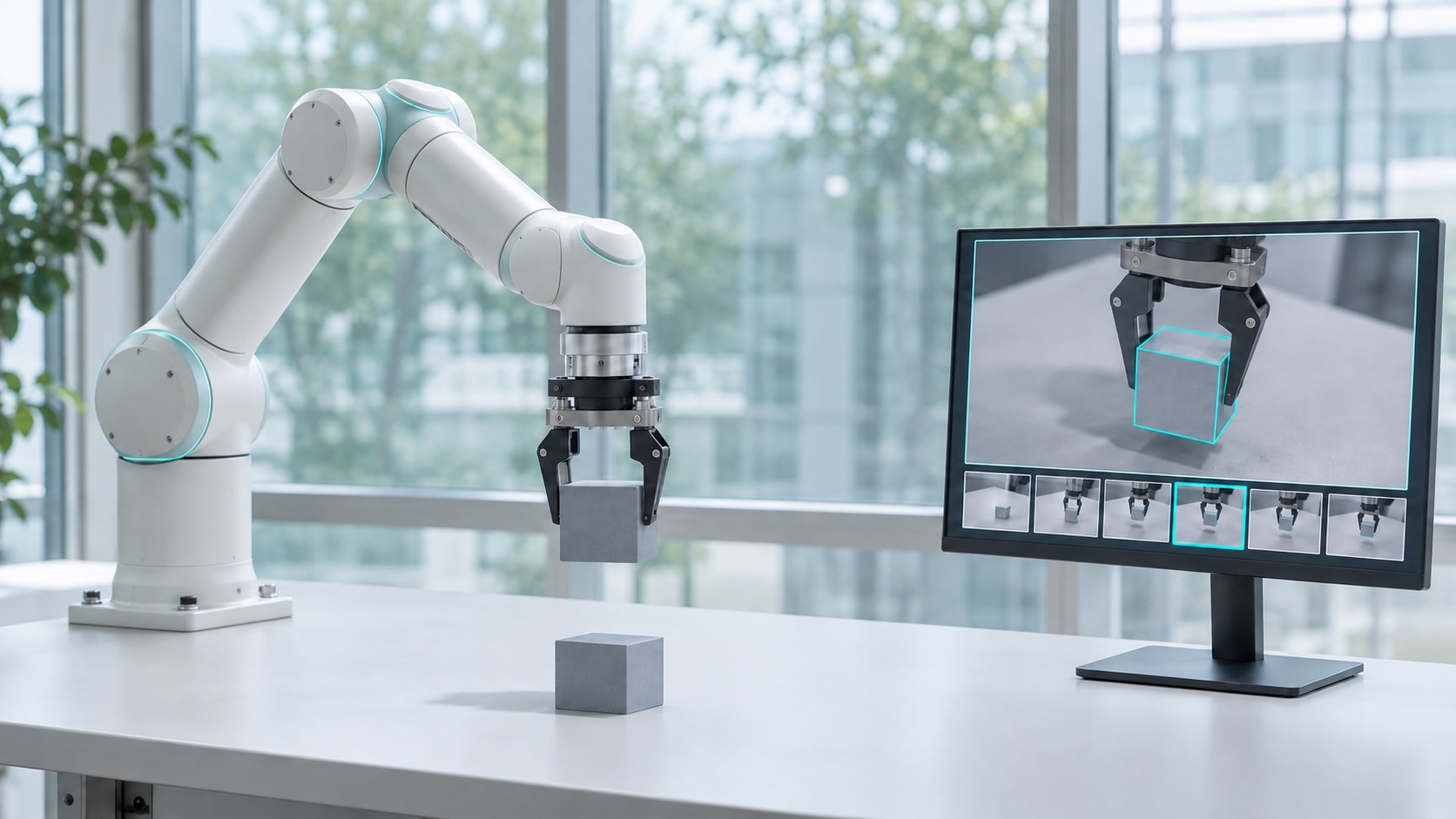
Physical AI Data
We create real-world data, video data for world models, and synthetic data for Physical AI, tailored to your hardware, objectives, and environment.
From design through collection, generation, and preparation, we combine motion capture and hardware logs with collection workflows using tools such as LeRobot and generation environments such as NVIDIA Isaac Sim and Omniverse Replicator.
For synthetic data, we also use our proprietary synthetic data generation system to meet a wide range of business needs.
3 Data Types
Real Data
We collect robot and humanoid motion data, sensor readings, and operation histories through motion measurement, including motion capture, and hardware logging, then prepare the data for its intended use.
Data for World Model
We create and prepare videos capturing robot movements, environmental changes, and action sequences to build data for world models that predict what changes will occur next as a result of an action.
Synthetic Data
To solve the time and cost challenges of collecting data from physical devices, we use the latest AI technologies and simulation to generate synthetic data with variations in robot motion and environmental conditions.
Work Type
Define the required data types, collection methods, and recording formats based on your hardware, objectives, and environment.
Collect video, joint states, control commands, and sensor readings through motion capture and hardware logging.
For supported hardware, build teleoperation and recording workflows using tools such as LeRobot to record real-world actions and operation histories.
Edit physical recordings and simulation footage into video sequences showing conditions before and after actions and changes in the environment.
Standardize frame rates and resolution, and synchronize the footage with control commands and state records to prepare time-series data for world-model training and evaluation.
Use environments such as NVIDIA Isaac Sim and Omniverse Replicator to generate virtual sensor images and labels identifying objects and their locations.
Vary actions and environmental conditions in simulation to generate data for situations that are difficult to capture on physical hardware, complementing real-world collection.
Check collected, created, and generated data for missing entries, duplicates, and consistency of labels and associated information.
Standardize recording formats and separate training and evaluation data into datasets ready for AI development and validation.
EXDREAM R&D / Robot Decision System
State / Action / Outcome
In our Robot Decision System (RDS), we are researching and developing workflows that transform hardware logs, operation histories, video, and simulation results into decision-learning data.
Connect each state, selected action, and outcome to build decision datasets specific to a company or task.
Preference Data
Compare candidate actions by safety, task duration, cost, and other criteria, as well as success or failure.
Use human assessments and simulation results to create preference data indicating which action is more appropriate, supporting Robot Decision Model training.
Training / Evaluation
We are researching workflows that connect decision datasets to Robot Decision Model training and comparative evaluation of Model and Harness combinations.
Separate training and evaluation data and scenarios, assess decision success, safety, and speed, and proceed to hardware validation.
DELIVERABLES
Deliver collected, created, and generated video, sensor data, and motion logs in agreed formats, together with the required labels and information needed to use the data, including collection and generation conditions.
Where needed, establish procedures and tools for collection, conversion, and generation.
Support continued additions and updates as objectives and environments change.
We hand over the prepared data to the simulator and proceed to validate motions and tasks.
As a rule, we prepare the data for use in this subsequent simulation stage.
Step
Review the hardware, objectives, and environment to define the required data and scope.
Select the relevant data types and design collection and generation methods and recording formats.
Combine real-world collection, video creation, and synthetic data generation to suit the purpose.
Standardize formats, add labels, and check for missing data, duplicates, and inconsistencies to prepare usable data.
Deliver the data in agreed formats and hand it over for motion and task validation in the simulator.
3 OFFERING TYPES
Based on your team structure and your project’s scope, scale, and goals, you can choose from the following three engagement models.
Around once a week
1–3 people
We create development plans for each company’s projects, document requirements, and support development team formation and vendor negotiations.
We also review actual progress and provide support to keep development projects running smoothly.
Around three days a week
1–3 people
We join your development team as your tech lead and work alongside you on design and development.
We share practical expertise and provide educational content, including seminars, so your employees can continue development independently after the project ends.
Embedded on site
Up to 5 people, depending on project scale
EXDREAM’s development team works on site at your company, handling everything from planning and coding to deployment.
For companies without engineers, we serve as your dedicated development team.
For companies with an existing engineering team, we join forces and work together toward successful delivery.
Services, team size, engagement frequency, duration, and responsibilities can be flexibly tailored to each project.
START A PROJECT